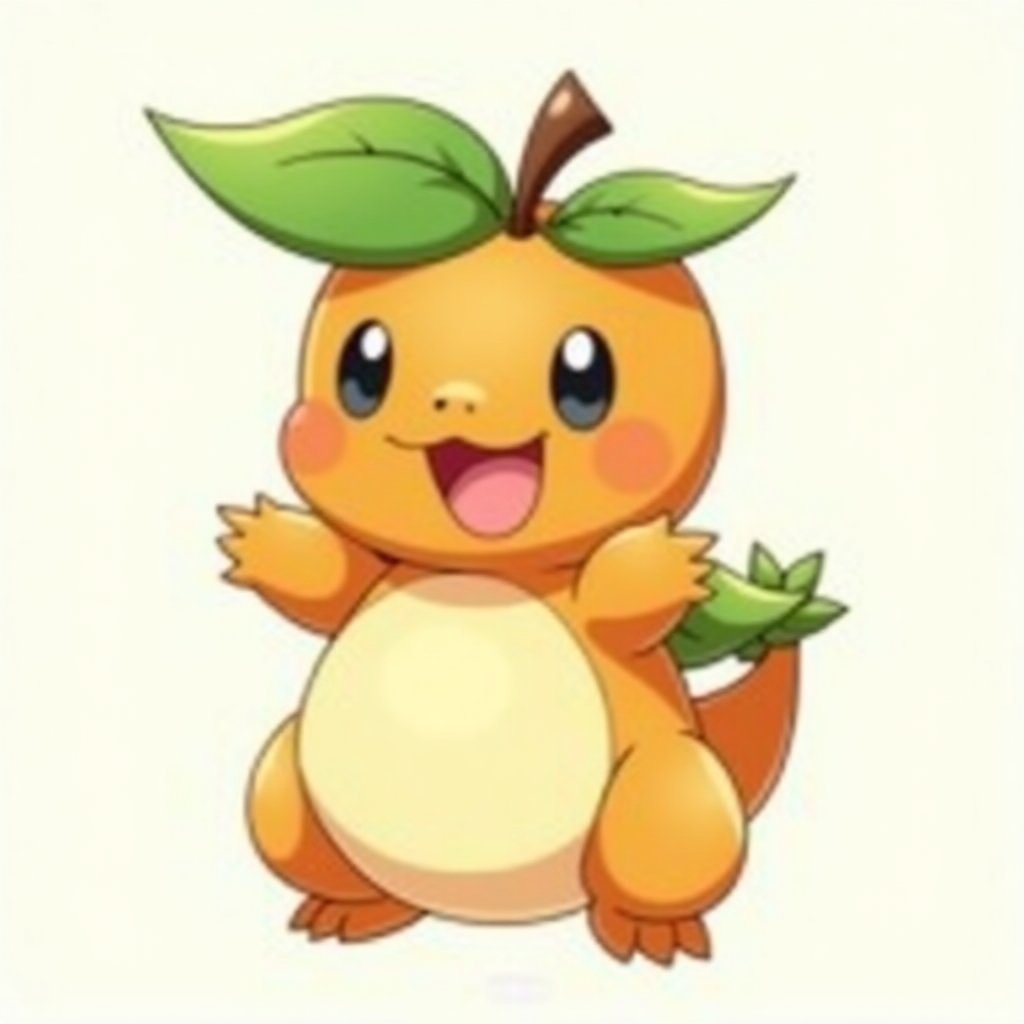
 Appletun Grove
Few evolution lines in Pokémon history are as charmingly weird as Applin's. A tiny apple Pokémon that hatches inside a real apple, lives its whole early life inside that apple, and then either becomes a cozy pie dragon or a spicy crispy flying dragon — depending entirely on which apple its trainer gives it.
Let's break down the whole line.
Applin: The Apple Pokémon
Applin (#840) is tiny. It looks exactly like an apple — green body, little stem on top, googly eyes. The Pokédex tells us it hatches inside an apple and spends its whole larval stage living in the apple's flesh.
"It spends its entire life inside an apple. It hides from its natural enemies, bird Pokémon, by pretending to be an apple."
It's essentially a worm that IS the apple. The cognitive dissonance required to bite into an apple after learning this is significant.
As a Pokémon, Applin is Grass/Dragon typing right from the start — making it one of the earliest Pokémon to be Dragon-typed without looking remotely like a dragon. It's a small, defenseless apple. A Grass/Dragon apple.
Applin is somewhat common in Galar's grass, though it prefers areas near apple orchards (naturally). In terms of stats, it's entirely pre-evolutionary — low numbers across the board, no real combat viability. It's a larval stage. It's waiting to become something.
→ Shop Applin plush on AmazonThe Split Evolution: Sweet Apple vs. Tart Apple
At evolution time, Applin splits:
- Sweet Apple → Appletun (the cozy apple pie dragon)
- Tart Apple → Flapple (the crispy winged apple dragon)
This is one of Pokémon's most flavorful (pun intended) branching evolution mechanics. The sweetness of the apple literally shapes the Pokémon's entire personality and type emphasis. Sweet apples create gentle, rounded, defensive creatures. Tart apples create fast, aggressive, angular ones.
Appletun gets higher HP and Special Defense — it's bulkier, softer, more defensive. Flapple is faster and more physically aggressive. The apple you choose tells you what kind of trainer you are.
The correct answer is obviously Appletun.
Appletun: The Apple Nectar Pokémon
Appletun (#842) is what happens when you feed your Applin the sweetest apple in Galar. The result is a small, round dragon coated in sweet amber nectar that hardens into a crust — giving it the look and feel of a baked apple dessert.
Its little legs poke out the bottom. Its face peers sleepily over the crust edge. It smells like warm apples and makes no threatening motions whatsoever.
The Pokédex describes Appletun's nectar as irresistible to other Pokémon, who approach for a taste — only to be absorbed by the nectar's strength. It's simultaneously the most adorable and slightly unsettling feeding mechanism in the franchise. Appletun doesn't hunt. It waits, deliciously, for things to come to it.
→ Shop Appletun plush and figures on AmazonFlapple: The Apple Wing Pokémon
Flapple (#841) goes the other way. Fed a Tart Apple, Applin becomes an acidic, wing-sprouting apple dragon that moves fast and hits hard. The tart nectar produces a more acrid, aggressive version — the wings are formed from apple skin folded into aerodynamic shapes.
Where Appletun sits and waits, Flapple darts and strikes. The contrast is perfect: same source material, radically different results based on the sweetness of the apple given.
For pure personality and visual appeal, Appletun wins. But Flapple has a dedicated fan base of its own — particularly competitive players who appreciate its higher Speed stat.
Dipplin: The Next Evolution (Scarlet & Violet)
The apple dragon line expanded in Pokémon Scarlet and Violet with Dipplin (#1011) — a candy-apple-themed evolution of Applin obtained using the Syrupy Apple item. Dipplin leans even further into the confection aesthetic, with a body that looks like a caramel-dipped apple at a fair.
Dipplin further evolves into Hydrapple (multiple apple heads, each with a different temperament) in late-game content — the apple dragon line eventually becomes something genuinely strange and impressive.
The progression from humble apple-larva Applin to multi-headed apple dragon Hydrapple is one of the most satisfying evolution arcs in recent Pokémon history. It's cozy to cosmic in five stages.
→ Shop the full Applin evolution line on AmazonBuilding the Applin Evolution Line Display
If you're building a Galar shelf, the Applin + Appletun pair is the obvious centerpiece. Two plush toys, side by side, showing the before and after of the sweetest evolution in Pokémon. The size difference (tiny apple → round apple pie dragon) is very satisfying on a display shelf.
Several shops sell them as a matched set:
→ Shop Applin + Appletun plush set on AmazonFor a complete Galar display, add a Gossifleur and Eldegoss pair for the floral element, and a Rookidee and Corvisquire for the avian contrast. The Galar region's aesthetic is particularly well-suited to cohesive display shelves.
The Cards: Evolution Line in TCG
The Applin evolution line has a surprisingly strong card showing across multiple sets:
Applin cards are affordable commons/uncommons perfect for completing a set or giving as small gifts. Raw copies are typically $0.50–$3. Appletun V and VMAX represent the premium end — the VMAX Rainbow Rare and the V Full Art are both beautiful cards worth displaying. See our full most valuable Appletun cards guide for current pricing. → Shop Appletun TCG cards on AmazonApplin/Appletun Competitive Overview
The evolution choice isn't just aesthetic — it has real mechanical implications:
| Stat | Appletun | Flapple | |------|----------|---------| | HP | 110 | 70 | | Attack | 85 | 110 | | Defense | 80 | 80 | | Special Attack | 100 | 95 | | Special Defense | 80 | 60 | | Speed | 30 | 70 | | Total | 485 | 485 |
Both share the same total stats but distributed completely differently. Appletun is built for survival and special attack; Flapple for physical speed. In singles formats, Flapple's Speed advantage matters more. In Doubles and VGC, Appletun's bulk and Harvest/Sitrus setup is more useful.
The Apple Acid signature move (special, Grass-type, 80 power, always lowers target's Special Defense) belongs to both — it's the evolution line's defining move and plays beautifully into Appletun's special attack focus.